A hot meal should never lead to a painful injury. Yet some people report burns after contact with extremely hot sauce, sudden spills, or container failures. In that situation, a BBQ sauce burn lawsuit may come up when decision-makers review product safety, container design, warnings, and handling practices. A BBQ sauce burn incident often starts when the sauce reaches an unsafe temperature or when it unexpectedly escapes its container. Hot sauce may spill during pickup, splash during pouring, or burst when a lid releases pressure. A person may also suffer burns after sauce soaks through thin packaging and comes into contact with the skin.
In many situations, the person expects mild heat, not skin damage within seconds. That gap between expectation and outcome often drives questions about safety and responsibility. As a result, people often focus on what caused the sauce to reach that temperature and what allowed it to come into contact with the skin.
Additionally, the setting matters. A restaurant, a drive-thru, a delivery bag, or a home kitchen can each create different risks. Even so, the core issue remains the same, as the sauce should remain contained and within a reasonable temperature range during normal handling.
Common situations that lead to BBQ sauce burns
Several recurring situations appear in reports tied to BBQ sauce burns.
First, a person may receive sauce in a flimsy cup with a weak lid. The lid may loosen during transport, and then the sauce may pour onto hands, legs, or a lap.
Next, a person may heat sauce in a microwave without clear guidance. Uneven heating can create hot spots that scald skin, even when the container feels warm rather than dangerously hot. In addition, steam pressure can build up inside sealed containers, leading to a sudden release during opening.
Restaurant service can also play a role. Staff may heat sauce in bulk and then portion it into small cups without enough cooling time. Staff may also place sauce cups near very hot items in a bag, which can raise the sauce temperature during travel.
Packaging and takeout handling also create risk. A bag may tip, a tray may slide, or a container may collapse. If the sauce escapes at a high temperature, skin contact can occur fast. Because of that, the chain of events often matters more than a single mistake.
Types of injuries linked to BBQ sauce burns
BBQ sauce burns can range from mild irritation to more serious injuries that require medical care. A first-degree burn often causes redness, tenderness, and short-term discomfort. A second-degree burn can cause blistering, swelling, and significant pain. A deeper burn can damage tissue beneath the top skin layers, increasing recovery time. Location often affects severity. Hands and wrists often suffer contact burns when a cup spills during handling. Legs and the lap often suffer burns during drive-thru transport or seated travel. The torso can also face exposure when a spill spreads across clothing.
Complications can develop in some cases. Blisters can break and increase the risk of infection. Scarring can occur, especially when the burn reaches deeper layers. Some people also report limited movement during healing when the burn crosses joints. Medical documentation usually becomes important in these cases. Records can show burn depth, treatment steps, pain level, and follow-up progress. That detail often shapes how people evaluate the injury’s impact.
Why product temperature becomes a legal issue
Food and condiments can come hot. Even so, the temperature still matters when the product creates an unreasonable burn risk during normal use. In many disputes, reviewers focus on whether the sauce temperature exceeded what a reasonable consumer would expect. They also look at whether the provider took reasonable steps to manage temperature before service. In addition, they examine how long the sauce stayed at a high temperature after packaging.
Temperature control can involve several practical steps. A business can use holding procedures that avoid overheating. A business can also reduce heat exposure during bagging, especially when it places sauce beside very hot items. When temperatures become extreme, risk rises quickly. Burns can occur in seconds, especially when liquid traps heat against the skin. Because of that, temperature often becomes one of the first technical points in a BBQ sauce burn lawsuit discussion.
How packaging design affects burn risk
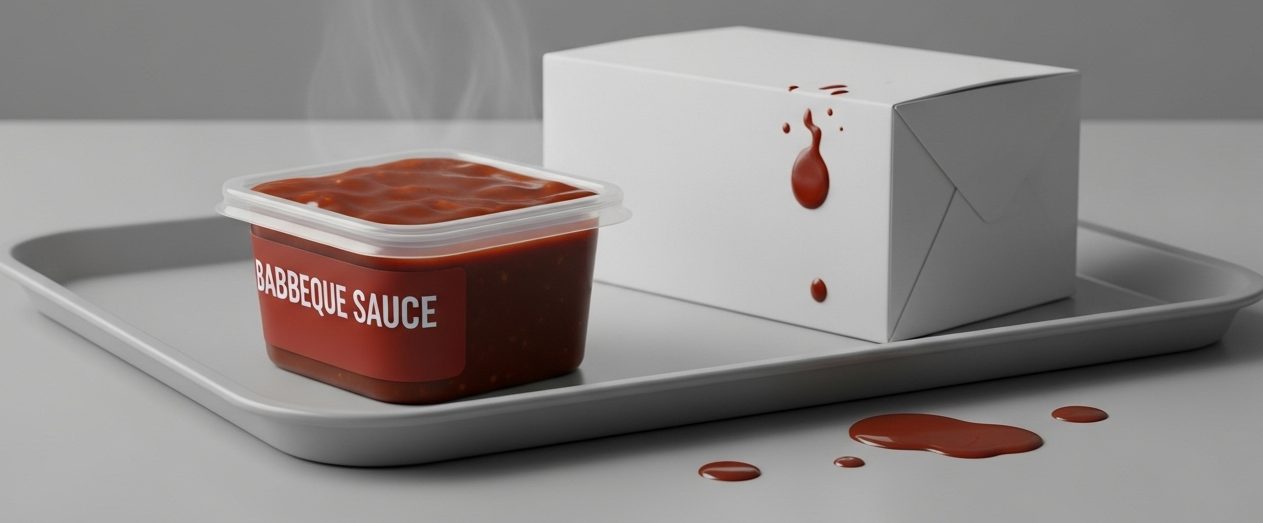
Packaging can reduce risk or increase risk. A strong cup with a secure lid can contain sauce during typical travel and handling. A weak seal, a poor lid fit, or thin materials can increase the risk of spills, especially when the sauce is hot. Some packaging issues involve pressure and steam. A sealed container can trap steam. When a person opens the lid, pressure release can push hot contents outward. In addition, flimsy cups can deform under heat, loosening lids and causing leaks.
Stability matters too. A narrow base can tip more easily. A shallow lid can pop off during movement. Also, stacking items inside a bag can press the lid and cause a leak. Reviewers often ask a practical question: Did the packaging behave as a reasonable customer would expect during normal handling? If the container fails under routine use, that failure may raise product safety questions.
The role of warnings and instructions
Warnings and instructions help people handle products safely. Clear guidance can address heating limits, safe opening steps, and spill risk. Visibility also matters. A warning hidden in small print may not effectively communicate the risk.
In many situations, people eat or handle sauce without any clear instructions. A consumer might assume a microwave-safe cup can handle high heat. A consumer might also assume a sealed lid opens without pressure issues. When that assumption turns wrong, injuries can occur.
Warnings can also apply in restaurant settings. A “caution: hot” label can alert customers, yet it still needs clarity. A label that appears after a spill is not very helpful. Placement and timing matter.
Additionally, instructions can address storage and transport. A stable carrier, a sealed bag, and careful placement can reduce risk. When warnings or instructions do not align with the actual risk, reviewers may question whether the provider communicated the hazard effectively.
How negligence gets evaluated in these cases
Negligence analysis often focuses on reasonable care under the circumstances. Reviewers ask whether the business acted with appropriate caution given the risk of hot liquid burns. In a food-service setting, reasonable care can include temperature checks, safe holding procedures, and staff training. It can also include packaging selection, secure sealing, and safe bagging routines. When staff handle sauce casually, even though it’s high-heat, that gap may matter.
Quality control practices also come into play. A business may use vendor packaging that fails repeatedly. A business may also ignore reports of leaking lids or warped cups. When prior issues exist, the response to them often shapes the analysis. Negligence evaluation also looks at causation. The reviewer asks whether the unsafe practice or condition caused the burn. That link often requires a clear timeline and clear evidence.
Who may face responsibility in a BBQ sauce burn lawsuit
Responsibility can involve more than one party, depending on the facts. A manufacturer may face scrutiny when the container fails due to a design or production problem. A distributor may face questions when storage conditions weaken packaging materials. A retailer or restaurant may face review when service routines create extreme heat or unsafe placement.
A delivery platform can also appear in discussion when transport practices contribute to the spill. Even so, the facts will determine who controlled the key risk factors.
Additionally, shared responsibility sometimes appears in complex incidents. One party may supply weak cups, and another party may overheat the sauce and pack it unsafely. As a result, identifying responsible parties often requires careful review of control, handling, and decision points.
How evidence supports a BBQ sauce burn claim
Evidence helps clarify what happened and why. Strong documentation can reduce guesswork and improve consistency. Common evidence can include:
- Medical records that describe burn depth and treatment
- Photos taken soon after the incident.
- Clothing that shows staining or heat damage
- Receipts that confirm time and location
- Packaging remnants, including lids, cups, or labels
- Messages or reports related to delivery or pickup
- Witness statements from companions or staff
Timing often matters. Photos and records created soon after the incident often carry more detail. In addition, packaging often disappears fast, so preservation can matter when available.
Evidence also supports a clear narrative. A consistent story about how the sauce spilled, how hot it felt, and what happened next can help reviewers understand the event.
Timeline of the Lawsuit
The timeline is according to the published reports of jurimatic.com and theindependent.com
May 19, 2023 — Injury Incident
The plaintiff, a 19-year-old woman from San Antonio, Texas, ordered breakfast tacos with barbecue sauce at a Bill Miller Bar-B-Q location. After taking the container of sauce out of the bag, she allegedly dropped it on her right thigh, causing second-degree burns. She claimed the sauce was significantly hotter than expected and was served in an unsafe container.
October 27, 2023 — Lawsuit Filed
The woman filed a negligence lawsuit in the Bexar County District Court, alleging that the restaurant’s practices led to her injury, including serving sauce at unreasonably high temperatures and failing to warn her of the risk.
January 17, 2025 — Jury Verdict
A jury in Bexar County found the restaurant grossly negligent and awarded the plaintiff approximately $2.825 million in damages. The award included compensation for pain and suffering, medical expenses, and punitive damages because the jury found that the restaurant served the sauce at an excessively high temperature, contrary to its internal policies.
February 2025 — Safety Changes After Lawsuit
Following the verdict, the restaurant chain began placing warning labels on drive-thru menus and on to-go packaging to alert customers to hot menu items, a change observers linked to the lawsuit’s outcome.
April 22, 2025 — Second Lawsuit Filed
Another customer filed a separate lawsuit against the same restaurant chain, alleging second-degree burns from hot barbecue sauce that warped its plastic packaging and spilled onto her leg. The new lawsuit sought monetary relief for medical expenses and disfigurement.
May 30, 2024 — Third Lawsuit Filed
A further complaint was filed on behalf of a four-year-old child who allegedly suffered second-degree burns after hot barbecue sauce spilled on their face at a restaurant location. The lawsuit claimed the restaurant failed to secure the sauce container and routinely overheated the sauce.
The importance of medical documentation
Medical documentation often anchors burn-related evaluation. Clinicians typically describe burn degree, size, location, and treatment steps. They may also record pain level and functional limits.
Follow-up visits can add important detail. A clinician may note blister healing, signs of infection, risk of scarring, or referral to specialty care. These records can also show whether the injury limited work tasks or daily movement.
Additionally, medical records can clarify the timeline. They can show when symptoms began and how quickly care occurred after exposure. That timeline can help connect the injury to the sauce incident.
Accurate medical notes also reduce disputes. When records match photos and witness accounts, the overall picture becomes clearer.
How consumer expectations factor into legal review
Many evaluations consider what a reasonable consumer expects during normal use. People expect BBQ sauce to feel warm or hot. Still, most people do not expect severe burns from a small condiment cup during routine handling.
Expectations also apply to packaging. A consumer expects a lid to stay on a sealed cup during normal transport. A consumer expects a cup to remain stable inside a takeout bag. When the container fails under typical movement, the gap between expectation and reality can matter.
Context shapes expectations, too. A sauce labeled as hot or spicy does not automatically signal dangerous temperature. Flavor heat differs from thermal heat. When the injury stems from temperature rather than spice, reviewers may focus on thermal risk communication.
How product testing and safety standards matter
Testing can reveal whether sauce containers withstand heat and movement. Testing can also show whether lids remain secure under normal handling. In addition, temperature checks can confirm whether holding practices keep products within safe ranges.
Businesses often rely on internal standards, supplier specifications, and food safety routines. Reviewers may assess whether a business consistently followed its own procedures. They may also look at whether the provider documented training and quality checks.
When consistent records exist, the evaluation often becomes clearer. When records appear to be missing or inconsistent, questions often arise. As a result, testing and safety protocols can play a meaningful role in how people evaluate the incident.
Possible outcomes in BBQ sauce burn cases
Outcomes vary depending on evidence, injury severity, and dispute level. Some matters are resolved through settlement discussions. Other matters move into litigation and court review. When discussions occur, parties often consider medical costs, recovery time, risk of scarring, and daily limitations. They may also consider whether the packaging failed under routine use and whether the warnings communicated the risk. Even so, each case follows its own path. Facts drive evaluation, and documentation often guides how reviewers assess responsibility and impact.
Frequently Asked Questions
What is a BBQ sauce burn lawsuit?
A BBQ sauce burn lawsuit involves legal claims arising from burn injuries caused by contact with extremely hot sauce or by sauce escaping from unsafe packaging.
Can hot sauce cause legal responsibility?
Courts may review whether unsafe temperature, weak packaging, or poor handling created an unreasonable risk during normal use.
Do packaging problems matter in these cases?
Packaging performance often matters when a lid pops off, a cup leaks, or a container deforms under heat.
What injuries appear most often?
Many incidents involve burns to the hands, wrists, legs, or lap, as these areas often come into contact with spilled sauce during transport.
Do these cases always go to court?
Many disputes are resolved through negotiation. Some disputes continue into litigation, depending on facts and disagreements.
Conclusion
A BBQ sauce burn lawsuit often involves more than an unexpected spill. Reviewers often examine temperature control, packaging design, warning practices, and handling routines. Medical documentation and clear evidence can also shape evaluation. Each situation depends on facts, injury severity, and safety practices. Even so, understanding how these cases develop helps explain why some food-related burn incidents lead to legal review.

Ayesha Awais is a content writer for JudicialNexus.com, covering accident reports, injury-related news, lawsuits, and public safety updates. All content is informational in nature and based on publicly available sources.