
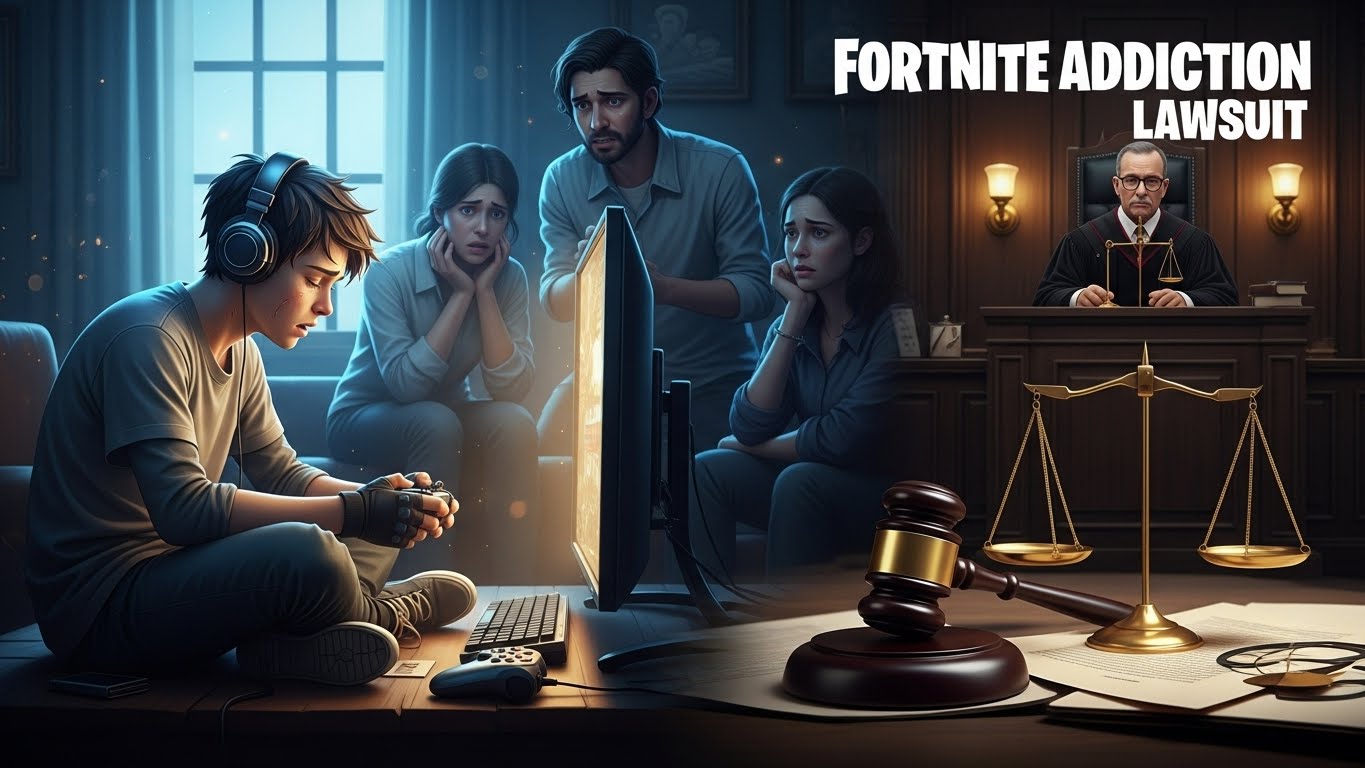
The Fortnite addiction lawsuit settlement discussion continues to evolve as courts review claims against Epic Games. Families accuse the company of designing Fortnite to encourage compulsive use among children and teenagers. The lawsuits argue that addictive mechanics caused emotional harm, academic decline, and behavioral problems. Epic Games disputes those claims and denies liability.
The litigation matters because Fortnite remains one of the most popular video games worldwide. Millions of minors play the game daily. Parents and lawyers now question whether game design crossed legal boundaries. The Fortnite addiction lawsuit settlement debate centers on responsibility, product design, and consumer protection.
The cases reflect a broader legal shift. Courts increasingly examine digital products that rely on behavioral engagement. Lawyers frame Fortnite not as harmless entertainment but as a system engineered to maximize screen time. Regulators and judges now face pressure to decide how far companies can go before harm becomes legally actionable.
How the Fortnite addiction lawsuits began
Epic Games released Fortnite in 2017. The game quickly attracted young players through colorful graphics and competitive gameplay. Fortnite adopted a free-to-play model. Revenue flowed through in-game purchases, cosmetic items, and seasonal battle passes.
Game designers introduced features that rewarded constant play. Daily challenges are refreshed regularly. Limited-time events encouraged urgency. Social competition rewarded time investment. Parents later said those mechanics kept children playing for hours.
Families began filing lawsuits in the United States and Canada. The complaints alleged that Epic Games knowingly designed Fortnite to exploit psychological vulnerabilities in minors. The lawsuits claimed that children developed symptoms similar to behavioral addiction. Lawyers compared the design to gambling-style reinforcement systems.
Courts consolidated some claims. Judges reviewed whether the allegations met legal thresholds. The Fortnite addiction lawsuit settlement discussion intensified as cases survived early dismissal motions.
Background of the Fortnite addiction litigation
The lawsuits do not claim that video games alone cause addiction. The complaints focus on specific design elements. Plaintiffs cite reward loops, variable reinforcement schedules, and monetization pressure. The allegations argue that Epic Games prioritized engagement metrics over child safety.
Parents describe behavioral changes in court filings. Children allegedly lost interest in school. Some withdrew socially. Some showed emotional distress when prevented from playing. Lawsuits argue that those outcomes were foreseeable.
Epic Games responded by emphasizing parental controls. The company highlighted screen-time tools and spending limits. Epic argued that Fortnite offers entertainment rather than compulsion. The company also pointed to warnings and age ratings.
Legal experts note that similar claims appear across the gaming industry. Fortnite is notable for its scale. The size of the player base raises the stakes for any potential Fortnite addiction lawsuit settlement.
Key allegations in the Fortnite addiction lawsuits
A short transition helps frame the allegations. Each category reflects a specific legal theory. Courts examine these claims individually and collectively.
Addictive game design
Plaintiffs contend that Fortnite employs intentional behavioural hooks. The complaints cite reward randomness and time-limited incentives. Lawyers say those mechanics mirror recognized addiction patterns. The lawsuits allege that Epic Games studied player psychology and applied those findings to increase dependence.
The allegations focus on minors. Children allegedly lack the maturity to self-regulate. Plaintiffs argue that Epic exploited that vulnerability. The lawsuits claim that design choices created foreseeable harm.
Epic disputes those claims. The company argues that engagement does not equal addiction. Epic states that players choose when to play and can stop at any time.
Alleged harm to minors
Families allege emotional and developmental harm. Complaints describe anxiety, depression, and academic decline. Some filings describe conflicts within households. Parents say Fortnite disrupted sleep and routine.
The lawsuits argue that Epic failed to warn consumers. Plaintiffs allege parents lacked adequate information regarding the risks. Lawyers argue that disclosure obligations apply when products are marketed to children.
Epic denies causation. The company argues that external factors influence behavior. Epic says the lawsuits rely on anecdotal claims rather than clinical proof.
Deceptive marketing practices
Some complaints allege misleading representations. Plaintiffs argue that Fortnite marketed itself as harmless fun. Lawyers say marketing failed to disclose addictive risks. The lawsuits claim that Epic targeted children through bright visuals and social pressure.
Epic responds that Fortnite complies with advertising standards. The company points to age ratings and public disclosures. Epic denies deceptive conduct.
Failure to implement adequate safeguards
Plaintiffs argue that Epic could have reduced harm. The lawsuits cite optional controls rather than default limits. Lawyers say that safety features should protect minors automatically.
Epic highlights existing parental tools. The company argues that responsibility rests with guardians. Courts now weigh whether that defense holds.
Timeline of the Fortnite addiction lawsuit settlement efforts
A transition clarifies the timeline’s purpose. Each phase shows how litigation developed. The sequence also explains why settlement discussions remain unresolved.
Early lawsuits and initial filings
Families began filing lawsuits several years after Fortnite’s release. Early cases appeared in North America. Plaintiffs alleged addiction-related harm. Courts reviewed jurisdiction and legal standing.
Some claims faced procedural challenges. Others moved forward. Judges allowed limited discovery in certain cases. The legal debate intensified.
Consolidation and procedural rulings
Courts addressed arbitration clauses and jurisdiction questions. Epic Games argued that user agreements required arbitration. Some courts enforced those clauses. Others allowed claims to proceed in court.
Those rulings shaped litigation strategy. Lawyers adjusted filings accordingly. The Fortnite addiction lawsuit settlement discussion gained complexity.
Ongoing litigation and settlement speculation
As cases continued, speculation about settlement emerged. No court has approved a global Fortnite addiction lawsuit settlement. No official settlement fund exists.
Legal analysts caution against misinformation. Many online sources incorrectly claim finalized settlements. Verified court records show ongoing litigation instead.
Current status of settlement discussions
Courts continue to review motions and procedural issues. Epic Games continues defending the cases. Plaintiffs continue pursuing claims. Settlement talks remain speculative rather than confirmed.
Judges have not ordered Epic to settle. Any future Fortnite addiction lawsuit settlement would require court approval.
Current status of the Fortnite addiction lawsuits
The litigation remains active. No finalized settlement has occurred. Epic Games denies wrongdoing and continues to contest claims. Courts have not issued rulings establishing liability for addiction.
Some cases proceed through arbitration. Others remain in court. The legal landscape varies by jurisdiction. Lawyers continue gathering evidence and expert testimony.
Parents seeking updates should rely on court filings. Verified records do not support claims of completed settlements. The Fortnite addiction lawsuit settlement remains unresolved.
Additional case details
Legal experts view these cases as part of a broader trend. Courts increasingly examine digital engagement models. The lawsuits raise questions about responsibility for psychological harm.
The outcomes could influence the gaming industry. Developers may face pressure to redesign engagement systems. Regulators may consider new consumer protections.
Families continue advocating for accountability. Epic Games continues defending its product. Courts now balance innovation, entertainment, and child safety.
Conclusion
The Fortnite addiction lawsuit settlement debate remains unsettled. Courts have not approved any global resolution. Epic Games continues denying liability while defending its design choices. Plaintiffs continue alleging harm tied to compulsive gameplay. The litigation reflects growing scrutiny of digital products aimed at children. The final outcome may shape how future games balance engagement with responsibility.
Disclaimer
All information in this article comes from verified public court records, legal filings, and reputable legal reporting. No settlement has been finalized unless confirmed by a court. Allegations remain unproven until resolved through legal proceedings.

Ayesha Awais is a content writer for JudicialNexus.com, covering accident reports, injury-related news, lawsuits, and public safety updates. All content is informational in nature and based on publicly available sources.