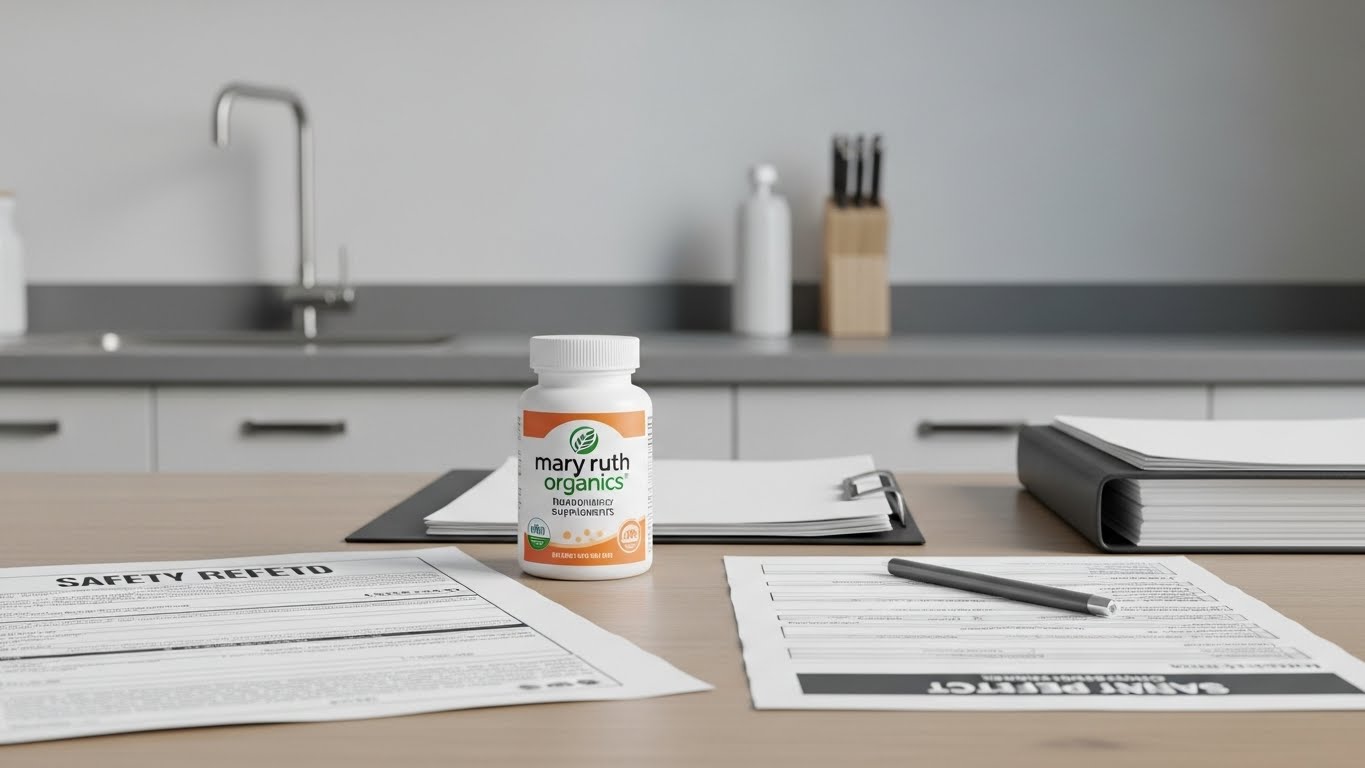
Many people search for the MaryRuth Organics lawsuit, expecting to find a single, active court case. The phrase does not refer to a single unified lawsuit. Instead, it reflects a combination of safety actions, concluded litigation, and ongoing public discussion.
Publicly available records confirm two core events. One involves a voluntary recall connected to an infant probiotic product. The other concerns a federal trademark dispute that was resolved in court. Online commentary often blends these separate matters and presents them as a single lawsuit, which leads to misunderstanding.
A clear explanation requires separating confirmed legal filings, regulatory safety actions, and consumer allegations that have not yet reached court.
Who is MaryRuth Organics, and which products matter here?
MaryRuth Organics operates as a wellness and supplement brand offering vitamins, minerals, and liquid supplements. The company markets products designed for adults, children, and infants.
Legal attention focuses on a single product category rather than the company’s entire catalogue. The focus is on a liquid probiotic product marketed for infants and on a limited number of product lots. Other products sold under the brand name were not subject to the same safety notice. A separate legal matter involved branding and packaging rather than product safety.
What happened with the infant probiotic recall?
In late 2021, MaryRuth Organics announced a voluntary recall involving two specific lots of a liquid probiotic product intended for infants. The recall addressed the potential presence of a microorganism that may pose health risks, especially to very young infants.
The recall applied only to identified lots. It did not apply to all products sold under the brand name. The notice described the affected product, the reason for the recall, and recommended consumer actions. A voluntary recall functions as a safety measure. It does not automatically establish legal fault or liability.
Why did the recall lead to legal questions?
Parents and caregivers often seek legal information when infant products are recalled. The possibility of contamination raises concern, even when no publicly confirmed injury reports are available. Some consumers questioned whether the recall was initiated promptly enough after the potential issues became known.
Others raised concerns about product marketing language that continued to describe the probiotic as safe and gentle. These questions do not confirm wrongdoing. They do explain why some people associate the recall with potential future legal claims.
What health risks did the recall describe?
The recall notice described a microorganism that can cause severe infection in rare situations, particularly among infants or individuals with weakened immune systems. The notice focused on potential risk rather than confirmed widespread injury. Medical evaluation remains the appropriate response when symptoms raise concern. A recall notice itself does not establish that harm occurred.
Did MaryRuth Organics face a lawsuit related to the recall?
Public records do not indicate a widely confirmed nationwide consumer class action settlement directly tied to the infant probiotic recall. Some websites discuss potential litigation. Others reference legal advertising rather than verified court filings. A recall can support later legal claims if evidence of injury exists. It does not automatically create a lawsuit or settlement fund.
What was the federal trademark lawsuit involving MaryRuth Organics?
A separate legal matter involved a federal trademark and trade dress dispute between companies. This case focused on branding, packaging, and intellectual property issues.
Court records indicate that the case was dismissed with prejudice in 2022. Dismissal with prejudice means the claims cannot be refiled. This lawsuit did not involve product contamination, infant safety, or consumer injury.
Why do online articles often combine recall issues and lawsuits?
Search results sometimes merge recalls, lawsuits, and consumer complaints into a single narrative. This blending creates confusion when readers expect one ongoing legal action.
Each event follows a different legal framework. Product recalls involve regulatory compliance and the communication of safety information. Trademark disputes involve intellectual property law. Consumer complaints reflect individual experiences rather than court findings. Clear separation helps readers understand what actually occurred.
Allegations Commonly Referenced in Discussions About MaryRuth Organics
Public discussion of the MaryRuth Organics lawsuit often centres on allegations rather than court determinations. These allegations appear across consumer commentary, legal analysis articles, and regulatory discussions. No court has issued findings confirming these claims as established facts.
Allegations Concerning Recall Timing
Some consumers allege that the voluntary recall was delayed relative to when potential safety concerns emerged. These claims focus on the speed of response rather than intent or motive. People raising this concern argue that earlier action could have reduced uncertainty.
They do not claim that the company ignored safety responsibilities. The allegation centers on expectations related to response timing. Legal evaluation of recall timing often depends on evidence showing when risk information became available and how a company acted under applicable safety standards.
Allegations Related to Product Safety Messaging
Another set of allegations focuses on how the infant probiotic product appeared in public descriptions before the recall announcement. Some consumers state that product language continued to emphasize safety and gentleness during the same period that internal review may have occurred.
These allegations raise questions about alignment between internal awareness and external communication. They do not assert confirmed misrepresentation. They reflect consumer interpretation of marketing language during the relevant timeframe. Courts that examine such claims typically assess whether statements matched the information reasonably available at the time of publication.
Allegations Regarding Quality Control Measures
Some commentary suggests that quality control systems did not prevent potential contamination. These allegations focus on manufacturing oversight, internal testing practices, and procedural safeguards.
Such claims do not assert that every product unit contained contamination. They express concern that monitoring processes may not have met consumer expectations. Legal review of quality control allegations usually involves examination of production records, testing data, and expert evaluation.
Financial Loss Without Physical Injury
Several allegations emphasize economic impact rather than medical harm. Consumers sometimes claim they paid full price for a product that was later recalled, which affected perceived value.
These claims focus on financial loss rather than personal injury. Courts often treat economic loss allegations under different legal standards than injury-based claims. Refund availability and recall remedies usually influence how such claims receive evaluation.
Allegations About Transparency and Consumer Communication
Some consumers raise concerns about clarity and transparency during the recall process. These allegations suggest that more transparent communication could have reduced confusion or concern.
This category reflects expectations about information sharing rather than proof of wrongdoing. Transparency concerns do not establish liability on their own. Courts may consider communication practices when evaluating broader consumer protection issues.
Allegations Discussed as Possible Future Legal Claims
Legal commentators sometimes identify potential categories of claims that may arise if additional evidence emerges. These discussions remain hypothetical and forward-looking.
Frequently mentioned theories include negligent quality oversight, delayed safety response, misleading safety representations, economic loss claims, and requests seeking changes to future practices. These theories describe legal possibilities rather than filed lawsuits. Any such claim would require documented evidence and a causal connection before court consideration.
Important Context Regarding Allegations
Allegations represent claims, not conclusions. A recall announcement or consumer concern does not establish liability. Courts require proof of duty, breach, causation, and damages.
Clear labeling of allegations supports balanced understanding. Readers benefit when discussion separates reported concerns from verified legal outcomes.
What potential legal claims do commentators often mention?
Although no confirmed nationwide class action appears publicly established, commentators often discuss possible claim types that could arise under certain circumstances:
- Negligent quality control
- Delayed safety response
- Misleading safety representations
- Economic loss related to product purchase
- Requests for injunctive relief
These categories describe legal theories rather than confirmed lawsuits.
How has MaryRuth Organics responded to safety concerns?
Company statements emphasize voluntary action, cooperation with safety authorities, and commitment to product quality. Public messaging highlights internal testing practices and quality assurance efforts.
The company denies intentional wrongdoing and frames the recall as a precautionary step. Some statements reference internal reviews and process improvements intended to reduce future risk. Including the company’s position provides balance and context.
How do refunds and remedies usually work after a voluntary recall?
A voluntary recall often includes options such as refunds or replacements. Companies typically provide instructions through customer service channels. A recall does not require a court settlement. It serves as a consumer safety notice and corrective action.
What records matter if someone considers legal action?
Legal evaluation relies on documentation. Proper records often include:
- Product packaging with lot information
- Proof of purchase
- Medical records if symptoms occurred
- Provider notes that connect exposure to health outcomes
Documentation supports review. It does not guarantee a claim.
How do courts generally evaluate contamination-related consumer claims?
Courts often examine several elements:
- Whether a duty of care existed
- Whether contamination occurred
- Whether exposure caused injury
- Whether damages resulted
Causation usually carries the most significant weight. A recall notice alone does not establish causation.
How can consumers stay informed about possible future developments?
Consumers who want updates often monitor official safety notices, company announcements, and verified court filings. Tracking confirmed records offers more clarity than relying on speculation. Staying informed does not require assuming litigation will occur.
Timeline of Key Events Related to the MaryRuth Organics Lawsuit
A clear timeline helps separate confirmed events from speculation. Public records support the following sequence of developments.
October 2021: Voluntary Infant Probiotic Recall
MaryRuth Organics announced a voluntary recall involving two specific lots of a liquid probiotic product intended for infants. The recall addressed a potential contamination concern and applied only to identified lot numbers. The announcement described the potential risk and advised consumers on next steps.
Late 2021: Consumer Attention and Safety Questions
After the recall announcement, consumer attention increased. Parents and caregivers raised questions related to product safety, recall timing, and refund options. Public discussion expanded even though no widespread injury findings appeared in official records.
January 2022: Federal Trademark Lawsuit Filed
A federal lawsuit involving trademark and trade dress issues was filed against MaryRuth Organics. This case focused on branding and packaging matters rather than product safety, contamination, or consumer injury.
Mid-2022: Ongoing Trademark Case Activity
The trademark lawsuit proceeded through routine procedural stages. Court activity during this period involved standard litigation motions and administrative matters.
August 2022: Trademark Lawsuit Dismissed
The federal court dismissed the trademark lawsuit with prejudice. This dismissal closed the case and prevented refiling of the same claims. The case did not involve infant probiotic safety issues.
2023–2025: Continued Public Discussion
Online discussion continued to reference the recall and the dismissed lawsuit together. Some commentary raised questions about quality control practices, recall timing, and marketing language. Public records did not show a certified nationwide consumer class action settlement during this period.
Current Status
Publicly available information shows a completed voluntary recall and a concluded trademark lawsuit. Verified records do not show an active nationwide consumer class action settlement tied directly to the infant probiotic recall at this time.
Frequently Asked Questions
Did MaryRuth Organics issue a product recall?
Yes. MaryRuth Organics announced a voluntary recall involving specific lots of an infant probiotic product due to potential safety concerns. The recall applied only to identified lots.
Is there an active lawsuit against MaryRuth Organics?
Public records do not show an active nationwide consumer class action settlement tied directly to the infant probiotic recall. A separate trademark lawsuit concluded in 2022.
What product did the MaryRuth Organics recall involve?
The recall involved a liquid probiotic product marketed for infants. The recall notice identified only a limited set of lot numbers rather than the complete product line.
Did the trademark lawsuit involve product safety?
No. The trademark lawsuit focused on branding and packaging issues between companies. It did not involve product contamination or consumer injury claims.
Why do people associate MaryRuth Organics with a lawsuit?
Many people associate recalls with lawsuits, especially when infant products raise safety concerns. Online articles often combine recall information with unrelated legal matters, which creates confusion.
Have consumers raised concerns beyond the recall?
Yes. Some consumers have raised questions about recall timing, safety messaging, refunds, and quality control practices. These concerns reflect public discussion rather than court findings.
Does a recall automatically mean legal liability?
No. A voluntary recall serves as a safety measure. Legal liability requires proof of injury, causation, and damages rather than the existence of a recall alone.
What should consumers do if they purchased the recalled product?
Consumers often check lot numbers, retain purchase records, contact the company regarding refunds, and seek medical guidance if health concerns appear.
How can people stay updated on possible legal developments?
People often monitor official safety announcements, company statements, and verified court records. Reliable updates usually come from confirmed public filings rather than speculation.
Conclusion
The MaryRuth Organics lawsuit reflects multiple events rather than one unified legal action. Verified information confirms a voluntary infant probiotic recall and a trademark lawsuit that ended in 2022. Consumer discussion also highlights concerns about recall timing, safety messaging, and quality controls, yet these points have not produced a widely confirmed nationwide settlement. Readers benefit from separating confirmed records from speculation and from relying on documentation and professional guidance rather than assumption.

Ayesha Awais is a content writer for JudicialNexus.com, covering accident reports, injury-related news, lawsuits, and public safety updates. All content is informational in nature and based on publicly available sources.