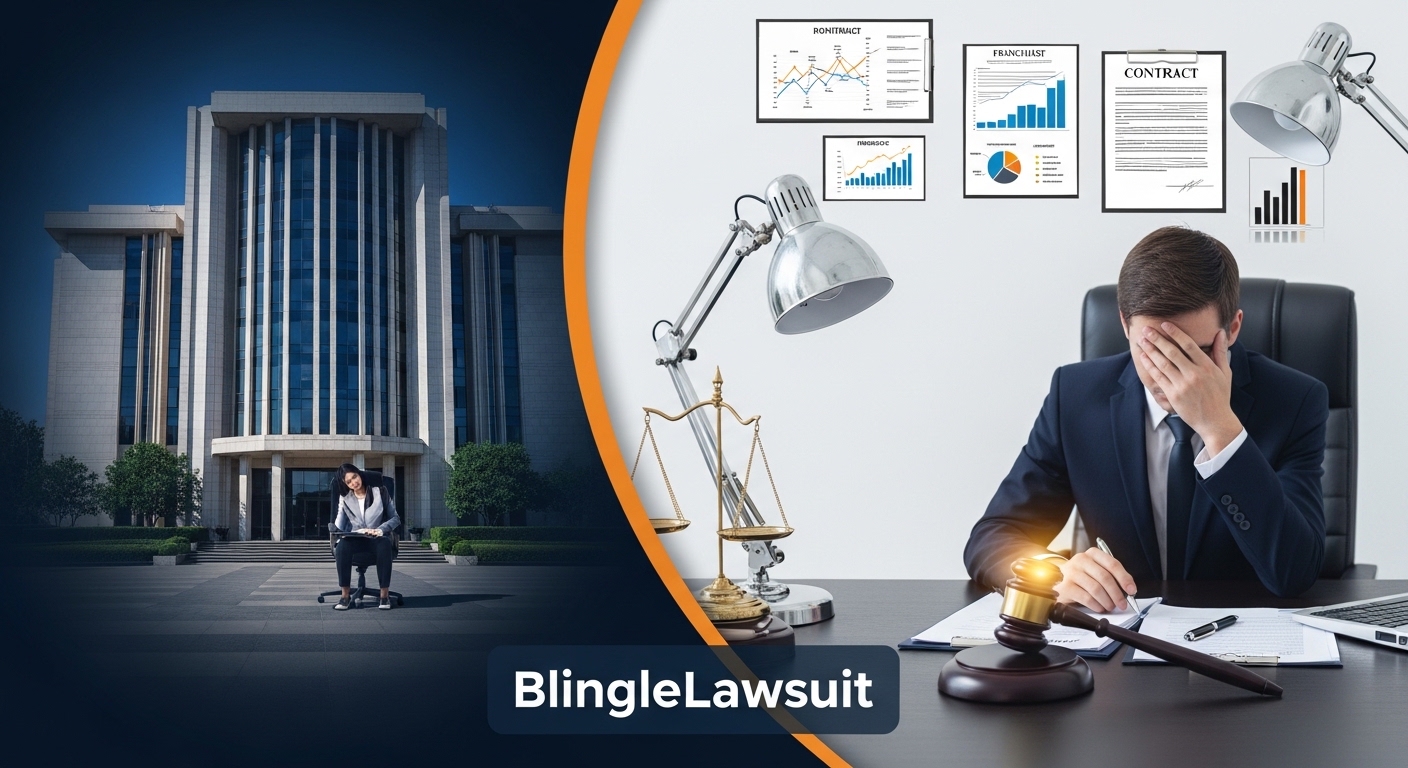
The BlingleLawsuit appears in search results for queries related to a federal franchise dispute. Public court records confirm a case involving entities connected to HorsePower Brands and a Blingle-branded business.
The case caption reads:
Waldron et al v. SVHB Marketing LLC d/b/a HorsePower Brands et al
The United States District Court for the Eastern District of Pennsylvania lists the matter under contract franchise classification. This classification signals a commercial dispute rather than a consumer claim.
Public docket entries identify HPB Lighting LLC doing business as Blingle Premier Lighting and Blingle. This detail establishes a direct link between the litigation and the brand referenced in search queries.
Quick Answer
The “BlingleLawsuit” search term refers to a real federal franchise contract case involving connected entities. A filing alone does not prove wrongdoing or liability.
Case Classification and Legal Meaning
The court categorizes the matter under contract franchise. This category carries specific legal implications. Franchise disputes typically arise from contractual relationships between franchisor and franchisee. Courts review written agreements, disclosure documents, and communication records. Contract classification indicates that the dispute likely involves:
- Agreement interpretation
- Performance obligations
- Financial terms
- Operational expectations
This classification does not indicate fraud, negligence, or consumer harm. It reflects a business dispute governed by contract law.
Procedural Status Based on Public Records
Public docket indexing shows that the case was filed on September 7, 2023. The case remains part of the federal court system record.
Court filings may include procedural motions, sealed entries, and administrative updates. Public visibility of a case does not confirm its outcome. Federal litigation follows a structured process. That process may include:
- Initial pleadings
- Motions to dismiss
- Discovery phase
- Settlement discussions
- Trial proceedings
The presence of a filing alone does not establish liability.
Legal Interpretation of the Filing
A court filing represents the start of a legal process. It does not represent a judicial conclusion. Plaintiffs present allegations within the complaint. Defendants respond through legal defenses. Courts evaluate claims based on evidence and applicable law. Legal interpretation requires separation between:
- Filed allegations
- Proven facts
- Final rulings
Search queries often collapse these distinctions. Legal analysis must maintain them.
Distinction Between Allegation and Adjudication
Allegations describe claims made by one party. Adjudication refers to a court decision after review. Public records confirm the existence of a case. Public records do not confirm:
- Liability findings
- Damages awarded
- Judicial conclusions
Legal outcomes emerge only after court review or settlement. This distinction protects against misinterpretation of litigation status.
Role of Franchise Agreements in Disputes
Franchise agreements govern the relationship between franchisor and franchisee. Courts rely heavily on these agreements in dispute resolution.
Key elements include:
- Fee structures
- Territorial rights
- Operational requirements
- Support obligations
Disputes often arise from differing interpretations of these terms. Courts examine contract language and performance evidence. The outcome depends on documented obligations rather than general expectations.
Importance of the Franchise Disclosure Document
The franchise disclosure document provides pre-sale information to prospective franchisees. This document plays a central role in legal review. Courts examine whether disclosures align with regulatory standards. The document includes:
- Cost breakdowns
- Risk disclosures
- Litigation history
- Financial representations
Disputes may involve claims related to disclosure accuracy. Courts assess whether information met legal requirements at the time of sale.
Public Interpretation vs Legal Reality
Search activity often expands beyond verified facts. Online discussion may combine speculation with limited data. Public interest in the BlingleLawsuit appears linked to franchise research trends. Users seek clarity on legal exposure and business risk.
Legal reality remains grounded in court records. Verified filings provide factual anchors. Commentary does not establish legal conclusions.
Common Misreading of Franchise Litigation
Franchise lawsuits often attract broad interpretation. Readers may assume that a filing signals systemic failure. Legal analysis requires caution. A single case does not define an entire business model.
Courts evaluate specific disputes based on facts and contracts. General conclusions require broader evidence. Misreading litigation status can lead to inaccurate assumptions.
What the Case Does Not Establish
The existence of the federal case does not establish:
- Proven wrongdoing
- Fraudulent conduct
- Business insolvency
- System-wide failure
Each of these outcomes would require formal judicial findings. Legal records must be interpreted within procedural context.
Broader Context of Franchise Disputes
Franchise litigation occurs across multiple industries. Contract disputes represent a common category within federal courts. Typical causes include:
- Agreement interpretation issues
- Financial disagreements
- Performance disputes
These patterns appear in many franchise systems. The presence of litigation reflects legal recourse rather than automatic fault.
Current Legal Position
Publicly available court records confirm the existence of a franchise-related case connected to HorsePower Brands and a Blingle-related entity.
No widely confirmed final judgment appears in public summaries. The case remains part of the legal process unless resolved through court decision or settlement. Legal status should be verified through official docket updates.
Lessons From BlingleLawsuit
The BlingleLawsuit search topic connects to a verified federal court case. The case classification indicates a contract-based franchise dispute.
A filing does not determine liability. Courts rely on evidence, agreements, and legal standards. Accurate interpretation requires distinction between allegation, procedure, and outcome.
Final Legal Insight
The term “BlingleLawsuit” reflects search behavior tied to a real federal case. Legal analysis confirms the existence of litigation involving entities connected to the brand.
Court records provide the most reliable information. Interpretation should remain grounded in verified filings and procedural status. Legal conclusions require judicial determination, not search trends.
FAQs
What is the BlingleLawsuit in legal terms?
It refers to a federal franchise contract dispute involving entities connected to HorsePower Brands.
Does the case prove wrongdoing?
No. A filing does not establish liability.
What type of case is it?
It is classified as a contract franchise dispute.
Which court handles the case?
The United States District Court for the Eastern District of Pennsylvania.
Is there a final judgment?
No confirmed final outcome appears in public summaries.

Ayesha Awais is a content writer for JudicialNexus.com, covering accident reports, injury-related news, lawsuits, and public safety updates. All content is informational in nature and based on publicly available sources.