
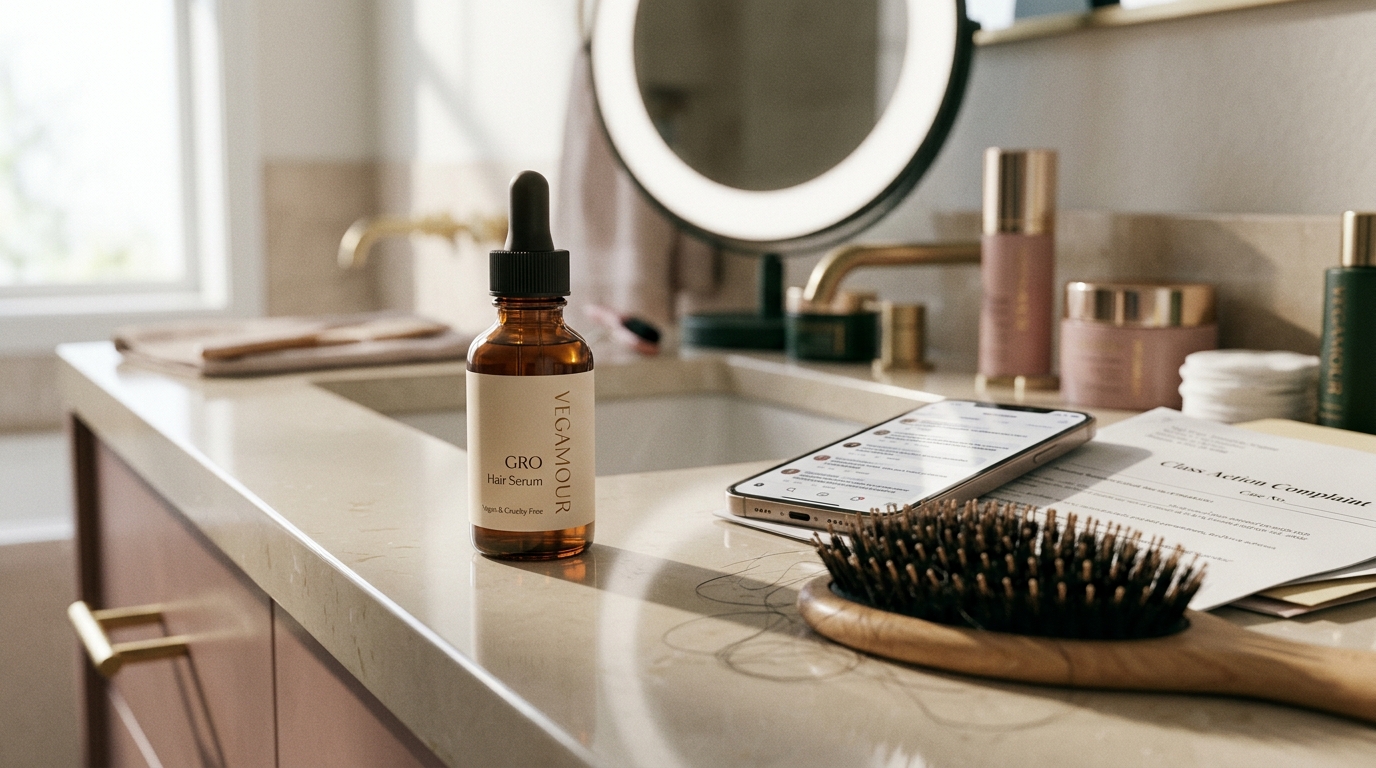
Vegamour did not look like the kind of company that would end up surrounded by lawsuit discussions. The branding felt soft and reassuring. The products appeared clean, modern, and wellness-focused. Influencers talked about healthier hair instead of miracle cures. Everything about the company looked carefully designed for consumers tired of harsh beauty products and unrealistic cosmetic marketing. That image helped Vegamour spread quickly across TikTok, Instagram, YouTube, and beauty blogs. Then the complaints started catching attention.
One customer said the products never delivered visible results. Another described unexpected shedding after weeks of use. Someone else complained about recurring subscription charges that kept appearing after they thought the order was canceled. Reddit discussions became filled with arguments between loyal customers and frustrated buyers trying to figure out whether the products were genuinely effective or marketed extremely well.
That growing frustration is what pushed the “Vegamour lawsuit” topic into search trends. Right now, publicly available records do not clearly show a final nationwide class action judgment against Vegamour. Still, the controversy around the company has grown far beyond a few isolated complaints. The discussion now touches on influencer marketing, clean beauty branding, subscription billing, and the growing pressure beauty companies face when social media hype collides with real consumer expectations.
Quick Answer
The Vegamour lawsuit discussion centers on consumer complaints about alleged misleading hair-growth claims, recurring subscription charges, and reported side effects such as shedding or scalp irritation. Publicly available records do not clearly indicate a final nationwide class-action judgment against Vegamour at this time.
Why Vegamour Became So Popular So Fast
The timing helped. Consumers were already moving toward cleaner beauty products when Vegamour started gaining traction. People wanted vegan formulas, cruelty-free ingredients, and products that looked safer than traditional hair-growth treatments. Vegamour understood exactly how to market that feeling.
The company did not present itself as a medical brand. It looked more like a wellness lifestyle company built around confidence and self-care. Influencers filmed calming hair routines instead of aggressive “before and after” commercials. The products looked premium without appearing overly clinical. For many consumers, that mattered.
Hair loss is personal. Someone dealing with thinning edges, postpartum shedding, stress-related hair loss, or hormonal changes usually is not shopping casually. Most people searching for hair-growth products already feel frustrated before they buy anything. That emotional side of the market is often ignored in legal discussions, but it explains why reactions to Vegamour became so intense online.
How the Backlash Started
At first, the complaints looked small. A few Reddit users questioned whether the products justified the price. Some buyers said they used the serum for months without noticing meaningful improvement. Others wondered whether influencer reviews were genuine or heavily sponsored.
Then the tone changed. Some reviews became emotional instead of simply critical.
Several users described panic after noticing increased shedding shortly after starting the products. Others said they felt embarrassed after spending large amounts of money chasing results that never appeared. Subscription complaints made the situation worse, as frustrated customers who were already unhappy with the products suddenly found themselves dealing with recurring charges and cancellation issues.
The criticism spread faster because social media rewards emotional experiences.
One negative TikTok video quickly led to dozens of comments from people sharing similar frustrations. Reddit discussions became longer and more aggressive. Beauty forums are filled with debates over whether Vegamour is genuinely effective or simply another wellness brand powered by influencer marketing. At the same time, many customers continued to defend the company. That split is important.
Some users still report healthier-looking hair, less breakage, and visible cosmetic improvement after consistent use. Publicly available information does not clearly establish that Vegamour products universally cause hair loss or injury. The controversy exists largely because consumer experiences appear deeply mixed.
The Real Issue Behind Most Complaints
Most criticism surrounding Vegamour eventually circles back to expectations. Many buyers did not view the products as ordinary cosmetics. The marketing often sounded scientific, wellness-focused, and transformation-driven simultaneously. Phrases like “clinically tested” and “science-backed” made the products feel more reliable to consumers already desperate for improvement.
That is where legal and consumer-protection concerns usually begin. Beauty companies are allowed to market products aggressively. Still, lawsuits and legal scrutiny often arise when consumers believe advertising creates unrealistic impressions of likely outcomes.
For someone struggling emotionally with hair thinning, those expectations can become very powerful. That emotional gap between hope and disappointment is one reason the Vegamour controversy grew beyond a typical beauty-product complaint cycle.
The Subscription Complaints Added Fuel
The recurring billing complaints made the backlash harder for the company to contain. Several customers online claimed they thought they were placing a one-time order, only to notice additional charges later. Others said canceling subscriptions felt confusing or unnecessarily difficult. Some buyers described frustration trying to secure refunds after deciding the products were not working for them.
These complaints are not unique to Vegamour. Subscription disputes are now a constant across the beauty, supplement, and wellness industries. Regulators and consumer attorneys are increasingly scrutinizing whether auto-renewal systems are transparent enough during checkout.
Consumers have also become much more skeptical of recurring billing systems over the last few years. Many buyers now immediately associate unexpected subscription charges with deceptive online sales tactics, even when companies technically disclose the terms.
The Advertising Scrutiny Around Vegamour
In 2023, BBB National Programs announced that Vegamour voluntarily discontinued certain advertising claims for its GRO Ageless Anti-Gray Hair Serum following a challenge before the National Advertising Division.
The issue focused on anti-gray-hair marketing claims in social media advertising. This was not a court ruling, nor was it a product recall. Still, the situation drew increased attention around how beauty brands use scientific-sounding language in wellness advertising. That issue extends far beyond Vegamour.
Modern beauty marketing increasingly relies on phrases like:
- clinically tested
- science-backed
- dermatologist reviewed
- clean ingredients
- visible transformation
For many consumers, those phrases sound far more authoritative than traditional beauty advertising. Regulators and advertising watchdog groups now pay much closer attention to whether those claims create impressions that go beyond what companies can reasonably support.
Why Hair Growth Products So Often Lead to Controversy
Hair-growth products exist in a strange space between beauty, medicine, and emotion.
Someone buying lipstick or moisturizer may feel disappointed if the product underperforms. Someone buying a hair-growth product often feels something much stronger. Hair loss can affect confidence, stress levels, self-image, and mental health all at once. That emotional pressure changes how consumers react when products fail to meet expectations.
At the same time, many buyers do not fully understand the difference between cosmetic wellness products and FDA-regulated medical treatments. Social media marketing sometimes makes those categories feel much closer together than they actually are. That confusion fuels many modern beauty-industry lawsuits.
Why the Vegamour Situation Matters Beyond One Brand
The backlash surrounding Vegamour reflects a much larger trend across the wellness industry.
Consumers are becoming far less trusting of influencer marketing than they were a few years ago. Before-and-after photos no longer automatically convince people. Buyers increasingly question whether online reviews are authentic, whether creators are heavily sponsored, and whether “clean beauty” branding actually means anything measurable.
Beauty companies now operate in a much harsher environment online. The same TikTok algorithm that can turn a product viral within weeks can also turn frustrated customer experiences into a reputational crisis almost overnight. That reality is changing how wellness brands market products and how consumers evaluate them.
What Public Records Do Not Clearly Show
Publicly available information does not clearly confirm:
- a nationwide settlement against Vegamour
- a final class action judgment
- FDA enforcement action
- a product recall
- a court ruling proving the products universally caused hair loss
That distinction matters because many online articles blur the line between internet backlash and legally facts.
Frequently Asked Questions
Is there an official Vegamour lawsuit?
The phrase usually refers to consumer complaints, legal scrutiny, advertising concerns, and discussions surrounding Vegamour’s marketing practices and subscription systems.
Why are consumers upset with Vegamour?
Most complaints involve a lack of visible results, shedding concerns, subscription billing frustrations, cancellation problems, and disappointment after long-term product use.
Did Vegamour products cause hair loss?
Some users report shedding or irritation, while others describe positive cosmetic results. Publicly available evidence does not clearly establish universal harmful effects across all users.
Did Vegamour recall its products?
Publicly available information does not clearly show a major nationwide product recall involving Vegamour products.
Conclusion
The Vegamour lawsuit discussion is really about trust above all else. The company built its popularity by understanding exactly how emotional hair loss can feel for consumers. That strategy helped the brand grow extremely fast online. Once disappointed buyers started sharing negative experiences publicly, the backlash spread just as quickly because consumers felt personally invested in the promise the products represented.
Publicly available records do not clearly confirm a final nationwide class action outcome against Vegamour. Still, the controversy shows how fragile trust in beauty brands has become in the social-media era, especially when emotional consumer expectations collide with aggressive wellness marketing.

Ayesha Awais is a content writer for JudicialNexus.com, covering accident reports, injury-related news, lawsuits, and public safety updates. All content is informational in nature and based on publicly available sources.