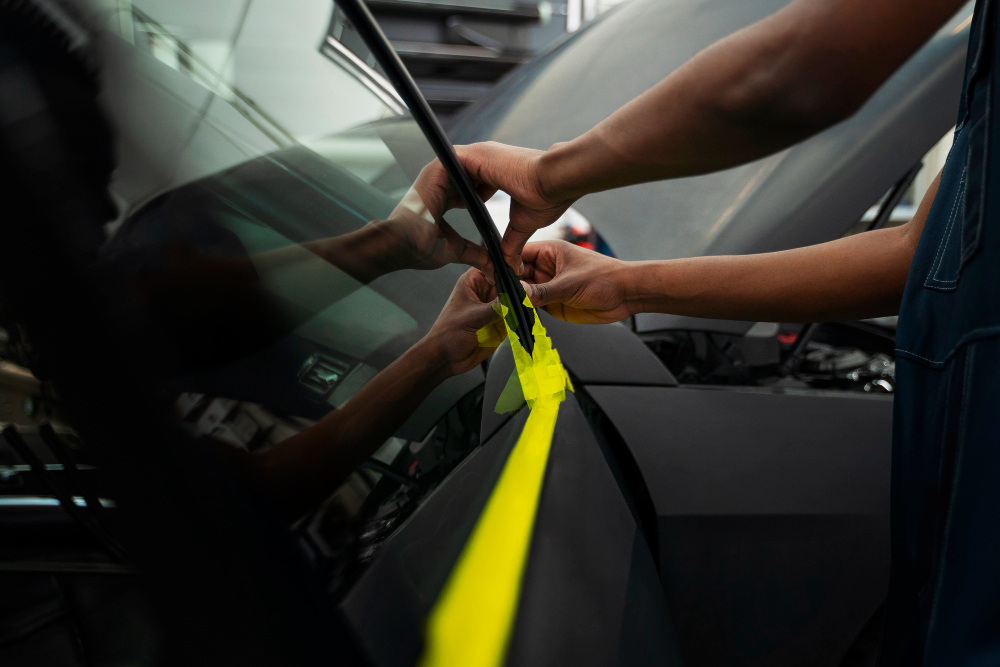
Window tinting offers many benefits, like reduced glare, heat, and UV rays. However, regulations across every state make it complex. Nowadays, it is the most popular form of car update. Even though in some states, it’s nearly necessary to adopt it. These days, new car windows use a special polyester material known as window tint. These days, new car windows use a special polyester material known as window tint, which aims to protect riders from ultraviolet (UV) rays and Infrared (IR) rays of the sun.
JUDICIALNEXUS aims to provide detailed guidelines for state window tint laws. Every state has different laws, regulations, rules, and guidelines. Our aim is to provide concise data about the darkness and reflection allowed in every state.
How Dark is Legal?
Car users must understand the importance of these laws to avoid legal issues and ensure their safety. In this way, car owners can grab all the benefits of window tint, including glare reduction, Protection from UV rays, and privacy. Moreover, its customization feature enhances the looks and style. Black is one of people’s favorite colors, and they love tinting dark windows.
If you desire an extra dark tint, make sure to check your state laws first. Every state has its own laws, rules, and regulations because some states prohibit the level of tint that is allowed. Window film can be applied to various glass surfaces, and it is particularly popular for cars due to its aesthetic value and ability to reduce sun glare. It helps reduce the heat inside the car and also protects the leather, steel, rubber, aluminum, and plastic from getting damaged. Consequently, it protects passengers from dangerous UV rays, which are the main cause of cancer.
What is Window Tint Terminology?
As discussed above, every state has different car window tinting laws and regulations. If you read the breakdowns of tint laws by state, you will encounter different terms. You must understand this terminology, and knowing the lingo can assist you in making informed decisions about your car. If you know about these laws, keep in mind that window tint percentages indicate the amount of light allowed in. This is also referred to as Visible Light Transmission (VLT) percent. The laws concerning windshield tinting specify the permissible amount of tint for the windshield based on state regulations.
VLT Percentage: VLT measures the percentage of visible light that can pass through a window film. A lower VLT indicates a darker tint and a higher VLT means a lighter tint.
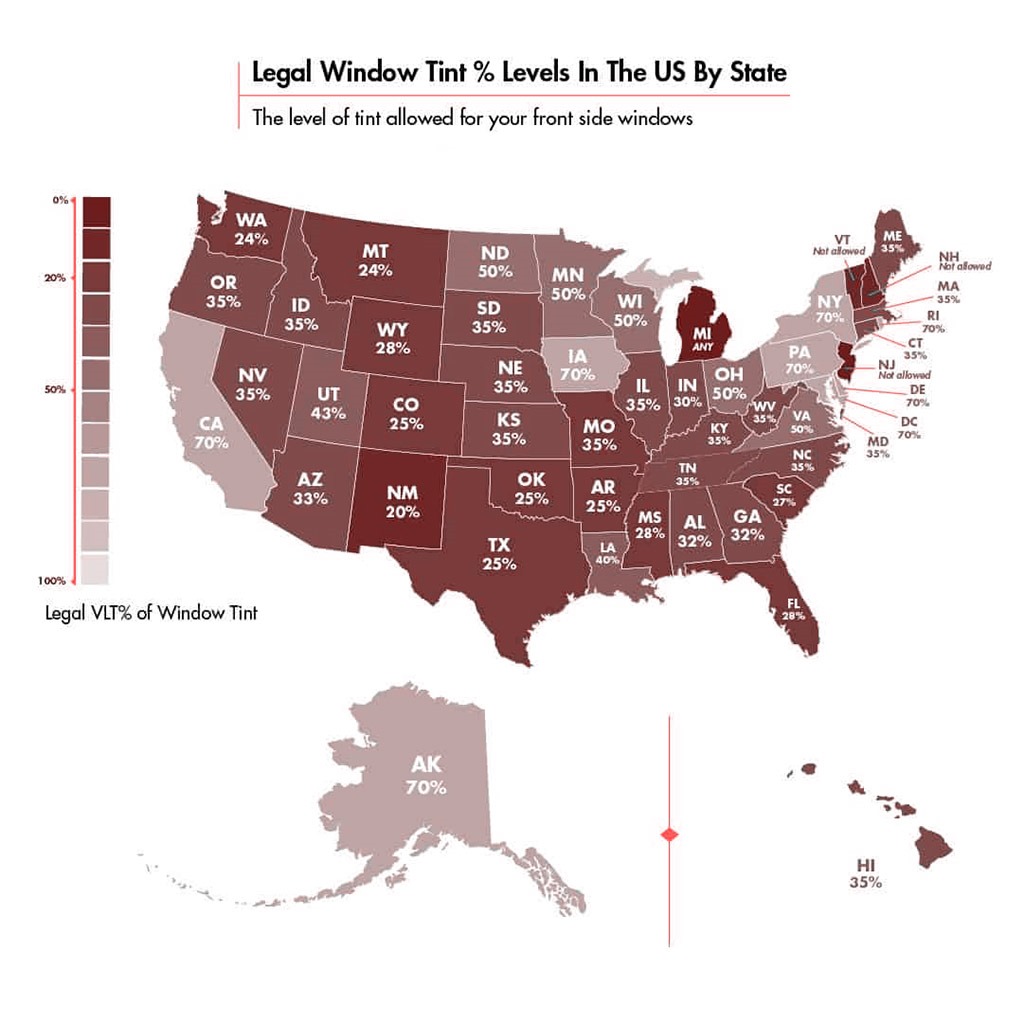
Front-side window tint Percentage: The level of tinting for the front-side windows varies significantly from state to state. The chart below shows this. This percentage exceeds the limit for rear windows to ensure visibility for law enforcement.
Back-side window tint Percentage: Back-side window tint laws are typically less restrictive than those for front-side windows because they don’t affect driver visibility. The legal limit varies depending on the type of vehicle – a car or an MPV (Multi-Purpose Vehicle).
Rear window tint Percentage: This is the percentage of visible light transmission allowed on your rear window.
Windshield: It is generally prohibited or severely restricted in almost every state not to tint the windshield. The AS-1 line is 4- 6 inches from the top of the windshield and can be tinted.
Reflectivity: Refers to how much light a window tint reflects back by a tinted film. The lower the reflectivity, the less light is blocked or reflected off the window. This can help reduce glare and heat inside the vehicle.
Tint Laws By State Chart
We’re going to share up-to-date window tint laws, including the darkest legal tint percentages in your state. You can check them by directly jumping to your state and clicking any of these most searched-for states here.
Florida, Georgia, Ohio, Illinois, Maryland, Michigan, North Carolina, Pennsylvania, Texas, and Virginia.
| State | Front Side Windows | Back Side Windows | Rear Windows | Windshield | Reflectivity | Other Restrictions |
| Arkansas | 25% | 25% | 10% | 5 inches | no metallic or mirrored tinting | none |
| Alaska | 70% | 40% | 40% | 5 inches | no metallic or mirrored tinting | no red, yellow, or amber tinting allowed |
| Alabama | 32% | 32% | 32% | 6 inches | no more than 20% reflective | none |
| Arizona | 33% | any | any | tinting allowed to the top of the manufacturer’s as-1 line | no more than 35% reflective | red and amber are not permitted, back window tinting requires the use of dual-side mirrors |
| Colorado | 27% | 27% | 27% | 4 inches | no metallic or mirrored tinting | red and amber are not permitted, back window tinting requires the use of dual-side mirrors |
| California | 70% | any | any | 4 inches | no more reflective than a standard window | red, amber, and blue are not allowed. Dual side mirrors are required for back tinted windows |
| Connecticut | 35% | 35% | any | non-reflective tint above the as-1 line | no more than 21% reflective | Dual-side mirrors are necessary for back-tinted windows |
| Delaware | 70% | any | any | non-reflective tint above the as-1 line | no metallic or mirrored tinting | Dual side mirrors are required for back tinted windows |
| Florida | 28% | 15% | 15% | non-reflective tint allowed above the as-1 line | no more than 25% reflective | Dual side mirrors required for back tinted windows |
| Georgia | 32% | 32% | 32% | 6 inches | no more than 20% reflective | red and amber are not allowed |
| Hawaii | 35% | 35% | 35% | no inch required must allow 70% of light | no metallic or mirrored tinting | Dual side mirrors are required for back tinted windows |
| Illinois | 35% | 35% | 35% | 6 inches | must be non-reflective | Dual side mirrors are required for back tinted windows |
| Idaho | 35% | 20% | 35% | tinting allowed to the top of the manufacturer’s as-1 line | no more than 35% reflective | Dual side mirrors are required for back tinted windows |
| Iowa | 70% | any | any | tinting allowed to the top of the manufacturer’s as-1 line | no excessive reflections are allowed, but not specified | none |
| Indiana | 30% | 30% | 30% | tinting allowed to the top of the manufacturer’s as-1 line | no more than 25% reflective | none |
| Kentucky | 35% | 18% | 18% | tinting allowed to the top of the manufacturer’s as-1 line | no more than 25% reflective | none |
| Kansas | 35% | 35% | 35% | tinting allowed to the top of the manufacturer’s as-1 line | tinting allowed to the top of the manufacturer’s as-1 line | red, amber, and yellow are prohibited and must have dual side mirrors for back tinted windows |
| Louisiana | 40% | 25% | 12% | tinting allowed to the top of the manufacturer’s as-1 line | no more than 20% reflective | none |
| Massachusetts | 35% | 35% | 35% | 6 inches | no more than 35% reflective | must have dual side mirrors required for back tinted windows |
| Michigan | any percent, but only 4 inches from the top of the window | any | any | 4 inches | no more than 35% reflective | none |
| Minnesota | 50% | 50% | 50% | none allowed | no more than 20% reflective | none |
| Maryland | 35% | 35% | 35% | 5 inches | no law | red, amber and yellow are prohibited and must have dual side mirrors for back tinted windows |
| Maine | 35% | any | any | 4 inches | must be non-reflective | dual side mirrors required for back tinted windows |
| Missouri | 35% | any | any | tinting allowed to the top of the manufacturer’s as-1 line | no more than 35% reflective | must have dual side mirrors for back tinted windows |
| Mississippi | 28% | 28% | 28% | tinting allowed to the top of the manufacturer’s as-1 line | no more than 20% reflective | none |
| Montana | 24% | 14% | 14% | tinting allowed to the top of the manufacturer’s as-1 line | no more than 35% reflective | none |
| Nevada | 35% | any | any | tinting allowed to the top of the manufacturer’s as-1 line | no law | dual side mirrors required for back tinted windows |
| Nebraska | 35% | 20% | 20% | 5 inches or as-1 line, whichever comes first | no more than 35% reflective | unclear on side mirrors, but red, amber and yellow are not permitted |
| New Jersey | no tinting allowed | any | any | no tint allowed | no metallic or mirrored tinting | dual side mirrors required for back tinted windows |
| New Hampshire | no tinting allowed | 35% | 35% | 6 inches | no metallic or mirrored tinting | dual side mirrors required for back tinted windows |
| New York | 70% | 70% | any | 6 inches | no metallic or mirrored tinting | dual side mirrors required for back tinted windows |
| New Mexico | 20% | 20% | 20% | 5 inches or as-1 line, whichever comes first | None | dual side mirrors required for back tinted windows |
| North Dakota | 50% | any | any | no more than 70% | no metallic or mirrored tinting | dual side mirrors required for back tinted windows |
| North Carolina | 35% | 35% | 35% | tinting allowed to the top of the manufacturer’s as-1 line | no more than 20% reflective | red, amber and yellow are prohibited and must have dual side mirrors for back tinted windows |
| Oregon | 35% | 35% | 35% | 6 inches | no more than 13% reflective | red, green, yellow, black and amber tints are not allowed, and must have dual side mirrors for back tinted windows |
| Ohio | 50% | any | any | no more than 70% | no more reflective than a standard window | none |
| Oklahoma | 25% | 25% | 25% | 5 inches or as-1 line, whichever comes first | no more than 20% reflective | dual side mirrors required for back tinted windows |
| Pennsylvania | 70% | 70% | 70% | none | no metallic or mirrored tinting | dual side mirrors required for back tinted windows |
| Rhode Island | 70% | 70% | 70% | tinting allowed to the top of the manufacturer’s as-1 line | no law | none |
| South Dakota | 35% | 20% | 20% | tinting allowed to the top of the manufacturer’s as-1 line | no metallic or mirrored tinting | none |
| South Carolina | 27% | 27% | 27% | tinting allowed to the top of the manufacturer’s as-1 line | must be non-reflective | red, amber and yellow are prohibited and must have dual side mirrors for back tinted windows |
| Texas | 25% | 25% | any | 5 inches or as-1 line, whichever comes first | no more than 25% reflective | red, amber, and blue not allowed. dual side mirrors required for back tinted windows |
| Tennessee | 35% | 35% | 35% | tinting allowed to the top of the manufacturer’s as-1 line | no metallic or mirrored tinting | none |
| Utah | 43% | any | any | tinting allowed to the top of the manufacturer’s as-1 line | no metallic or mirrored tinting | dual side mirrors required for back tinted windows |
| Vermont | Not allowed | any | any | tinting allowed to the top of the manufacturer’s as-1 line | no metallic or mirrored tinting | dual side mirrors required for back tinted windows |
| Virginia | 50% | 35% | 35% | tinting allowed to the top of the manufacturer’s as-1 line | no more than 20% reflective | red, amber and yellow are prohibited and must have dual side mirrors for back tinted windows |
| West Virginia | 35% | 35% | 35% | 5 inches | 20% reflective | red, amber and yellow are prohibited and must have dual side mirrors for back tinted windows |
| Wyoming | 28% | 28% | 28% | 5 inches or as-1 line, whichever comes first | no more than 20% reflective | Dual side mirrors required for back tinted windows |
| Washington D.C. | 70% | 50% for cars, 35% multi-purpose vehicles | 50% for cars, 35% multi-purpose vehicles | 5 inches or as-1 line, whichever comes first | no law | none |
| Wisconsin | 50% | 35% | 35% | tinting allowed to the top of the manufacturer’s as-1 line | no law | dual side mirrors required for back tinted windows |
Tint Laws By State Map
Why Are Dark Tints Banned in Some States?
Tinted windows have various benefits, such as reduced glare and heat. However, lawmakers often consider these factors to outweigh the advantages. Window tinting is illegal in many states primarily for security and safety reasons. It reduces visibility because the driver can face problems in poor weather and at night. In this way, the risk of accidents increases on the road.
Moreover, the other reason behind window tint may be illegal for the safety of the public. Dark tint impairs a driver’s vision to see pedestrians, cyclists, and other vehicles, especially at intersections or blind spots. Window tinting can make difficult for law enforcement and police because they are unable to see inside the car due to dark tint.
Dark tint making difficult for police and other federal agencies during the investigation and increases the risk of danger while driving. That’s the only reason every state has set its own window tint laws, which dictate the permitted level of tinting for each window of your vehicle. These state laws permit drivers to use window tint to ensure safety.
Can you Face Any Legal Issues With Tinted Windows?
The answer to this question is sometimes yes, but it totally depends on state laws that govern by state rules. Car window tinting is allowed in many states at some level. Tinting done along with these laws is allowed to avoid any legal problems. If you’re not following these parameters of window tint, you will definitely be pulled over. Whereas in other states, darker windows are illegal, and you are not allowed to tint your vehicle window. Without any legal permission, the dark tint would face issues and negative attention from law enforcement. To avoid all these legal issues, you need to understand and follow the laws that your state has established for the public.
Is Blacked Out Tint (Limo Tint) Legal?
Generally, limo tint is not legal, but in the United States, it varies from state to state, as defined by the Department of Motor Vehicles in each location. While complete blackout is illegal in some states, very dark tint on side and back windows is permitted. For example, the State of California allows tinting front passenger windows only 70%.
A limo tint is not allowed on these windows, which means that they should allow at least 70% of visible light to pass through, and only 30% tint darkness is allowed. The main reason for this is to ensure public safety. Blacked-out windows obstruct visibility and increase the risk of accidents.
What is California Window Tint Law?
In California, the weather is usually sunny, so the government allows the public to tint car windows to avoid sun rays. The window tint in California must comply with specific requirements as mandated by the state’s law.
- Red, blue, and amber tints are prohibited.
- Use only green, gray, or neutral smoke color to tint the window.
- Front-side window tint allows a maximum of 30% darkness and allows at least 70% light transmission.
- Ensure that the reflectivity of the front and back windows must not be increased.
Front Window Tint Law
The little strip on the car windshield, formally known as the AS-1 line, is only allowed when it meets your state’s law. These front window tint strips ensure that the driver has sufficient visibility of their surroundings. Such precautions provide protection from the sun while driving on the road. However, in some countries, it is not allowed to install windows that are not tinted in case of a specified degree of light reflection. Front window tint strip laws vary from state to state, So you must check the above chart to ensure your safety.
Difference Between 35%, 20% and 5% Tint
Window tint refers to the amount of visible light that can be passed through the film, which is measured in percentages. The higher percentage means light can pass through if the tint is lighter. In another case, dark tint means less light passes through and reduces visibility. It also depends on every state-to-state law and the different car windows.
In What State is 5% Tint Allowed?
In some states, only 5% of VLT is illegal for the backside passenger car window. Below is the list of these states that allow any VLT%.
- Missouri
- Nevada
- Vermont
- Ohio
- North Dakota
- Michigan
- Arkansas
- Delaware
- California
- Utah
- Colorado
- Iowa
- New Jersey
What are the Medical Exemptions And Waivers For Window Tint?
In many states, medical exemptions or waivers are offered for those individuals who require reduced sunlight exposure. The best example is folk with albinism who have vision problems and need to protect themselves from sunlight. People with diseases like Psoriasis might also be affected by sun rays. While sun rays can be beneficial for individuals who have psoriasis, they also [ez-toc][ez-toc]have a negative reaction to UV radiation. Other diseases like lupus or porphyria can also cause extreme sensitivity to sunlight. If you have any problem, you must obtain a letter from your doctor. Keep it with your car to avoid any legal issues.
All these laws are applied for your safety and security, so always follow the rules and regulations that maintain your security. Before applying tint to your window, always check your state law to ensure your safety.
Find Your Nearest Window Tint
When you are buying window film tint for your car, ensure that you are connecting with a company that understands these laws and rules regarding tint percentages. Also, make sure that you understand how they affect your car window tint. So, find your nearest dealer who can help you stay compliant with all the state regulations. This way, you will get all the benefits without the risk of an unwanted citation from the cops.
Disclaimer: Judicialnexus collects all the above information from raynofilm.com. It’s an authentic source

Ayesha Awais is a content writer for JudicialNexus.com, covering accident reports, injury-related news, lawsuits, and public safety updates. All content is informational in nature and based on publicly available sources.